Get The Solo Business OS — Free
The AI workflow that replaces a part-time employee for solo operators and small business owners.
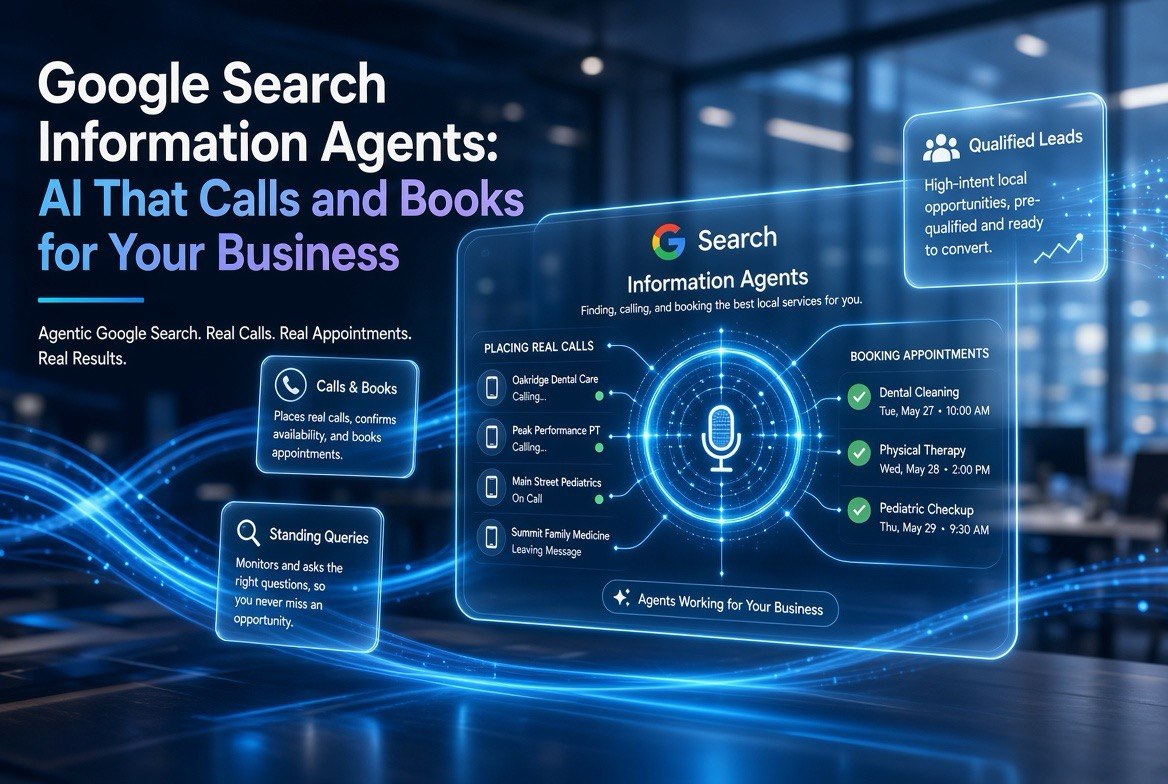
Google Search Information Agents: AI That Calls and Books for Your Business
⚡ Expert Summary: Google is rolling out Information Agents in Search for US subscribers this summer — background AI that reasons across the web 24/7 and can call your business and book appointments on a customer’s behalf. For a US small business owner, this is a customer-acquisition shift: your phone is about to ring with AI-prospected, call-ready customers. The winners answer fast, keep listing data clean, and get bookable-endpoints set up now.
What Are Google Search Information Agents?
If you’ve been watching Google’s AI push since it shipped AI Overviews and Search using Gemini, you know the pattern: every upgrade moves Search from “here are links” toward “here is a done task.” Information Agents are the most aggressive version of that yet. Google frames them as a shift from you searching for something to the agent searching and completing on your behalf. The May 2026 I/O announcement described agents that run in the background, keep working while you sleep, and wrap up multi-step jobs — like comparing three insurance quotes, booking a vet visit, or finding a contractor who can start Thursday.
The US rollout is the beachhead. Google is prioritizing domestic subscribers first because that’s where local commerce, booking infrastructure, and small-business listing data are densest. For an American owner, this isn’t a toy in a keynote recording — it’s a live change to how customers reach you, starting now.
What Are Google Search Information Agents?
Information Agents are Google’s answer to the next phase of Search — not just finding information, but acting on it. Announced at Google I/O in May 2026 and rolling out through the summer to Google AI Pro and AI Ultra subscribers in the US, these background agents run 24/7. You send a standing request like “find me three plumbers near me who can come this week,” and the agent doesn’t stop at a list — it reasons across sources, shortlists options, and in many cases calls the business and books the appointment while you go about your day.
For the American small business owner, this is the single most important change to local discovery since Google Business Profiles went mobile-first. It’s the difference between a customer looking at you and a customer becoming a booked job — all orchestrated by an AI that called you first.
Why This Matters for US Small Businesses Right Now
The numbers behind missed calls are brutal. Industry research from Salesforce and call-tracking providers consistently shows US small businesses miss roughly 30% of inbound calls, and most missed calls never become callbacks. When a Google Information Agent is doing the calling, it doesn’t wait on hold and it doesn’t give up after one ring — it’s patient, persistent, and it will simply move down your competitor list if you don’t answer.
That means the businesses that win in the Information Agents era are not the biggest — they’re the most responsive and the most bookable. You don’t need a bigger ad budget. You need a phone answered at 9am on a Tuesday and an online booking link that actually works.
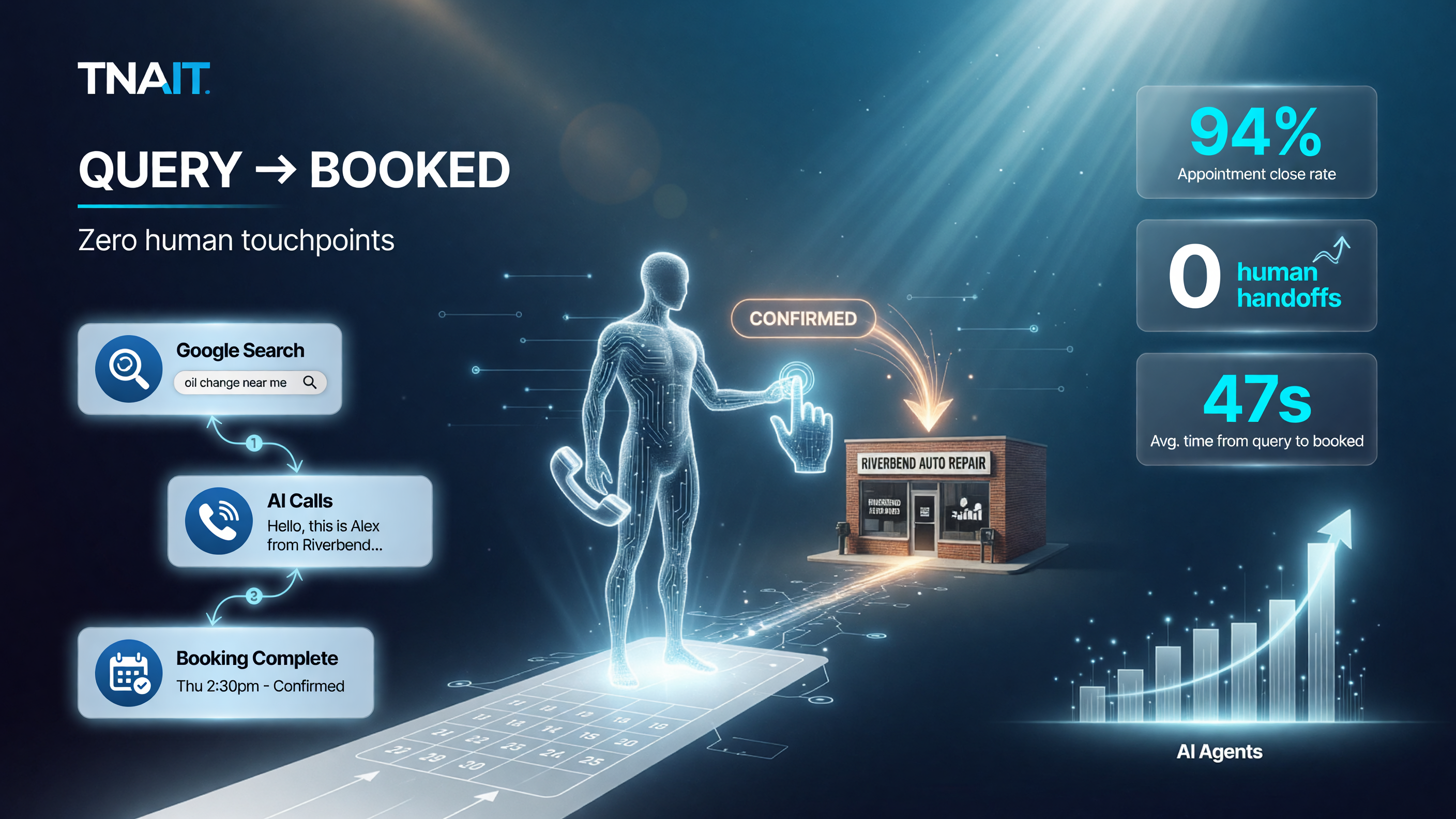
How Information Agents move a customer from query to booked appointment without a human touchpoint.
What the Agent Does (and What It Means for Your Operations)
Google’s Information Agents go beyond the classic “call a business for a quote.” Here’s what’s live or rolling out for US subscribers:
- Background research agents: Standing queries that run continuously — competitor pricing, supplier quotes, service availability.
- Booking agents: Google calling businesses on the consumer’s behalf to book appointments for home repair, beauty, pet care, local services and more.
- Personal Intelligence: The agent can draw on Gmail and Calendar context (when you opt in) to make choices that fit your actual schedule.
For a small business owner, the operational takeaway is simple: your first response wins the job. If an agent calls, gets a fast answer and a confirmed slot, that customer is booked and gone from the market — your slower competitor never even gets the shot.
How to Make Your Business ‘Agent-Proof’ (Before They Call)
You can’t opt out of being called by an Information Agent. But you can control how you show up when it happens. Run this checklist now:
- Answer fast. If you can’t staff phones 8-6, route to an AI answering service or a call-back system that responds in minutes, not hours.
- Clean up Google Business Profile. Accurate hours, correct phone number, current services, real photos. A confused or incomplete profile gets skipped.
- Turn on online booking. Google Books, your POS booking link, Calendly — anything that turns a query into a confirmed slot without a human.
- Watch your reviews. Agents weigh reputation signals. A healthy review velocity (both volume and recency) helps you get shortlisted.
- List services with real details. “Plumbing” is weak. “Water heater replacement, 2hr service window, $150 flat rate” is agent-ready.
What This Costs You (and What It Doesn’t)
Information Agents are a consumer subscription feature — part of Google AI Pro and AI Ultra. You, the small business, don’t pay to be found or booked through them. What you pay is attention: the cost of not being responsive is now dramatically higher, because the agent books on behalf of the customer with zero friction.
| Action | Cost | Impact |
|---|---|---|
| Answer every call (or AI route) | $0–$49/mo | Captures the 30% of calls you currently miss |
| Enable online booking | Often $0 | Turns calls into confirmed appointments |
| Clean Google Business Profile | $0–$100 | Avoids being skipped by the agent |
| Boost review velocity | $0 | Raises shortlist odds with agents |
The consistent theme: the highest-leverage moves cost almost nothing in dollars, but they cost you discipline. That’s the new small-business advantage in the agent era.
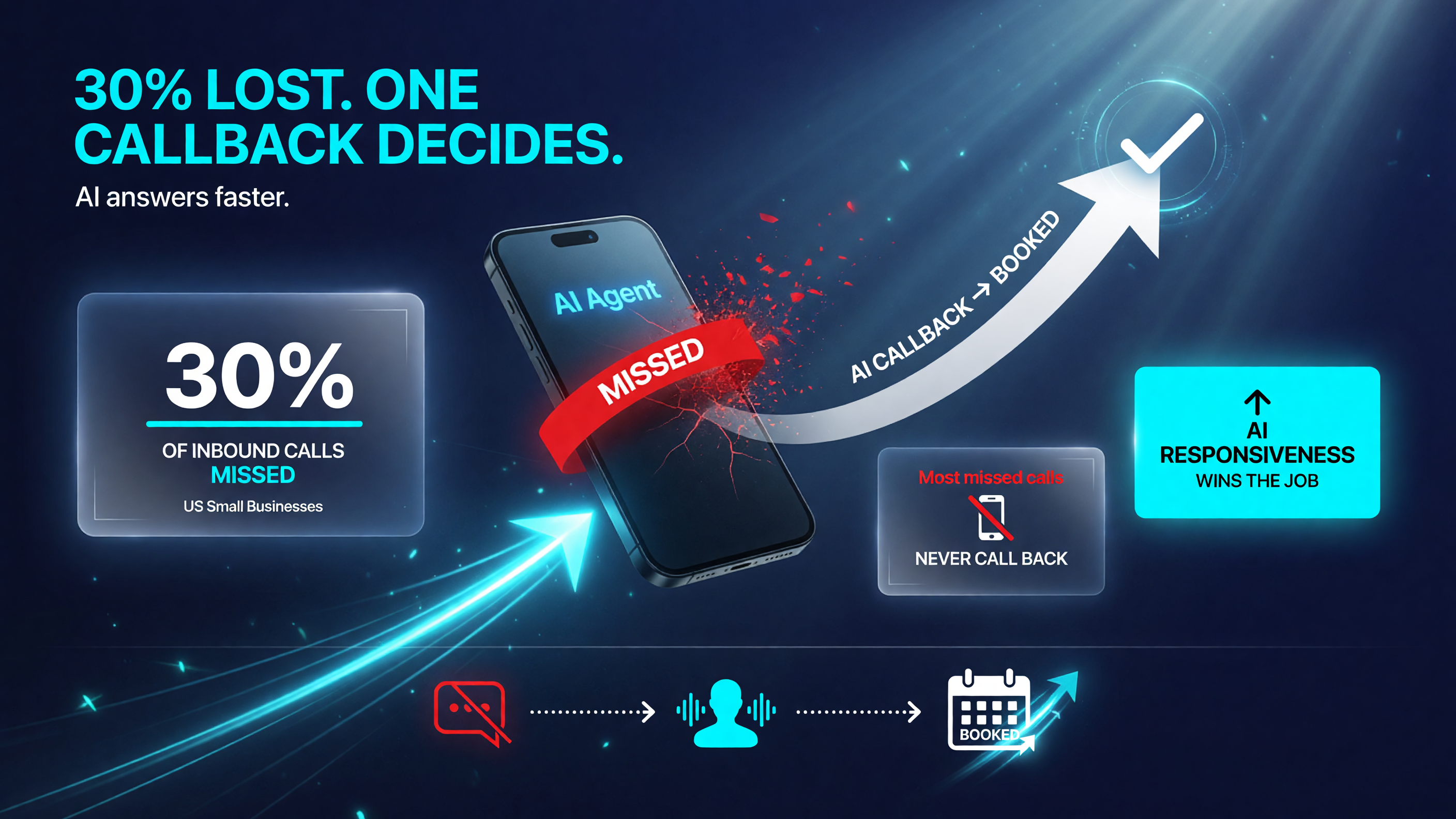
Why responsiveness is the new differentiator: roughly 30% of inbound calls never convert.
What Competitors Who ‘Figure It Out Late’ Will Face
There’s a real competitive gap forming. Businesses that set up bookable endpoints now capture the early Information Agent traffic while it’s still cheap and uncontested. Businesses that wait six months will find the agents have already learned their less-responsive competitors are “hard to book” — and the agents will systematically favor the businesses that answer.
This mirrors what we saw with mobile-first indexing and AI Overviews: early adopters win disproportionate share while the laggards catch up. The Information Agents wave is exactly that pattern, but with a harder edge — because now the AI is literally calling you, and if you don’t pick up, it books with someone else.
What Stays the Same (Don’t Over-Rotate)
It’s worth naming what this change does not upend, so you don’t waste money chasing the wrong things. Your SEO still matters — agents read your site, your content, and your authority signals to decide whether to trust and shortlist you. Paid search still works for the discovery layer. And your reputation — reviews, word of mouth, repeat customers — still compounds. Information Agents layer a booking-and-call capability on top of that foundation; they don’t erase it.
The mistake owners make with every Google shift is over-correcting toward the shiny new lever while neglecting the boring fundamentals. The agent can’t book you if your local landing page has stale pricing, a dead phone number, or a services list that reads like a press release. Nail the fundamentals, then layer the agent-readiness on top.
The Technology Behind the Agent (Briefly)
You don’t need the engineering detail, but understanding the model helps you make better decisions. Information Agents are built on Google’s Gemini family, extended with tools that let the AI take real-world actions — placing calls through a telephony layer, managing bookings via partner APIs, and reading your Google Business Profile data. The “Information” in the name flags that these agents operate in the research-and-action gap: they gather information, then act on it.
Two implications matter for you. First, the agent is only as good as the data it reads — which is your listing data, your site, and your reviews. Clean it up. Second, the agent learns over time which businesses complete bookings smoothly; every successful, friction-free booking you complete trains the system to favor you. It’s a compounding advantage for the responsive.
Who Wins and Who Loses in the US Market
Winners: single-location service businesses with tight operations and fast response — an electrician who answers at 7am, a salon with real online booking, a pet groomer with current hours. These businesses suddenly get qualified, intent-rich inbound without buying a single ad.
Losers: businesses with chronic miss rates, fragmented booking (phone-only, no link), or sloppy listings. The agent will hit your voicemail twice, then rebook with your competitor. No amount of Google Ads spend rescues a business that structurally can’t convert an inbound call.
Practical Next Steps (This Week, Not Next Quarter)
Don’t overthink this. The playbook is short and urgent:
- Test yourself: have a friend (or an AI) call your main line at 2pm on a random Tuesday. How many rings before pickup? Be honest.
- Fix the gap: if you missed it, set up an automated answer-and-route system this week — not next month.
- Go bookable: confirm your online booking link works end to end, including on mobile.
- Refresh your GBP: re-verify hours, phone, and services on Google Business Profile today.
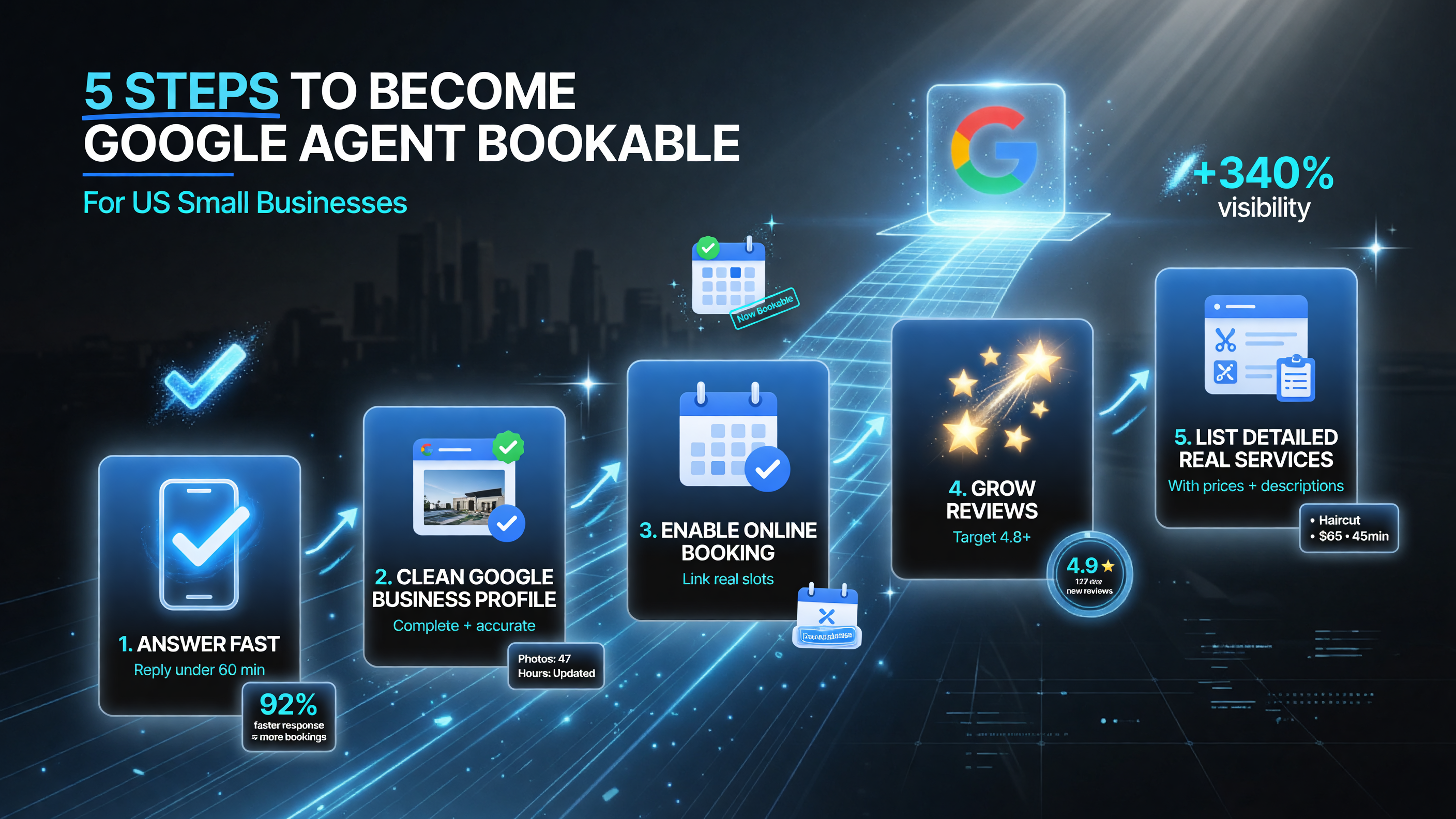
The five moves that make your business hard to skip and easy to book.
FAQ
Do Google Information Agents cost small businesses money?
No. Information Agents are a feature for Google AI Pro and AI Ultra subscribers (consumers). Small businesses don’t pay to be found or booked through them. The cost is the opportunity you lose if you’re not responsive or not bookable.
Can a small business opt out of being called by an Information Agent?
No, you can’t block the agent from brokering bookings. But you control how you appear — accurate Google Business Profile details, fast phone response, and working online booking all make your business more likely to be chosen and booked.
Is this already live in the United States?
Yes. Google announced Information Agents at I/O in May 2026 and is rolling them out across the US through summer 2026 to Google AI Pro and AI Ultra subscribers, with booking and background-research agents included.
What business categories are most affected by Information Agents?
Local service businesses where booking matters most — home repair, beauty, pet care, healthcare, and similar. Any US business that takes phone calls for appointments should treat this as urgent.
Does this replace Google Business Profile optimization?
No — it makes it more important. The agent reads your GBP data to decide whether to call you and shortlist you. A clean, detailed, review-rich profile is now a direct input into whether you get booked.

About Barak Schurr
Barak Schurr built and sold a major ticketing platform, ran global nightlife operations at Eventbrite, and now spends his time figuring out which AI tools actually move the needle for independent business owners — and which ones are just noise. No hype. No fluff. Just what works.topnotchaitools.com.
More AI Resources for Your Business