Get The Solo Business OS — Free
The AI workflow that replaces a part-time employee for solo operators and small business owners.
Kargo Karlo Review 2026: Agentic Media Buying for Small Business
⚡ Expert Summary: Kargo launched Karlo on October 1, 2026, a self-serve agentic media buying platform aimed at smaller US teams and businesses rather than enterprise ad departments. Its real differentiator is not bidding automation, which was solved years ago. It is the claim that creative finally sits inside the optimization loop. An Ad Council campaign run through Karlo reported a 21% lift in ad recall and a 10% lift in aided awareness. If you run paid media with one or two people, this is the first product worth testing since the agentic wave started.
Most agentic advertising tools in 2026 automate the same two things: bidding and audience targeting. Both were already the most automated parts of paid media. The argument Kargo made at launch on October 1 is blunter than that. The automated parts were never the bottleneck. Creative is the biggest lever on performance, and creative has sat outside the machine the whole time.
Kargo put that argument behind a product. It is called Karlo, it is generally available as of today, and it is built for the advertiser who currently runs campaigns out of a spreadsheet and three browser tabs.
What Kargo Actually Launched
Karlo is a self-serve agentic media buying platform. The pitch is direct: give a smaller team access to the creative and media technology Kargo has built over two decades, in a format sized for their headcount and speed.
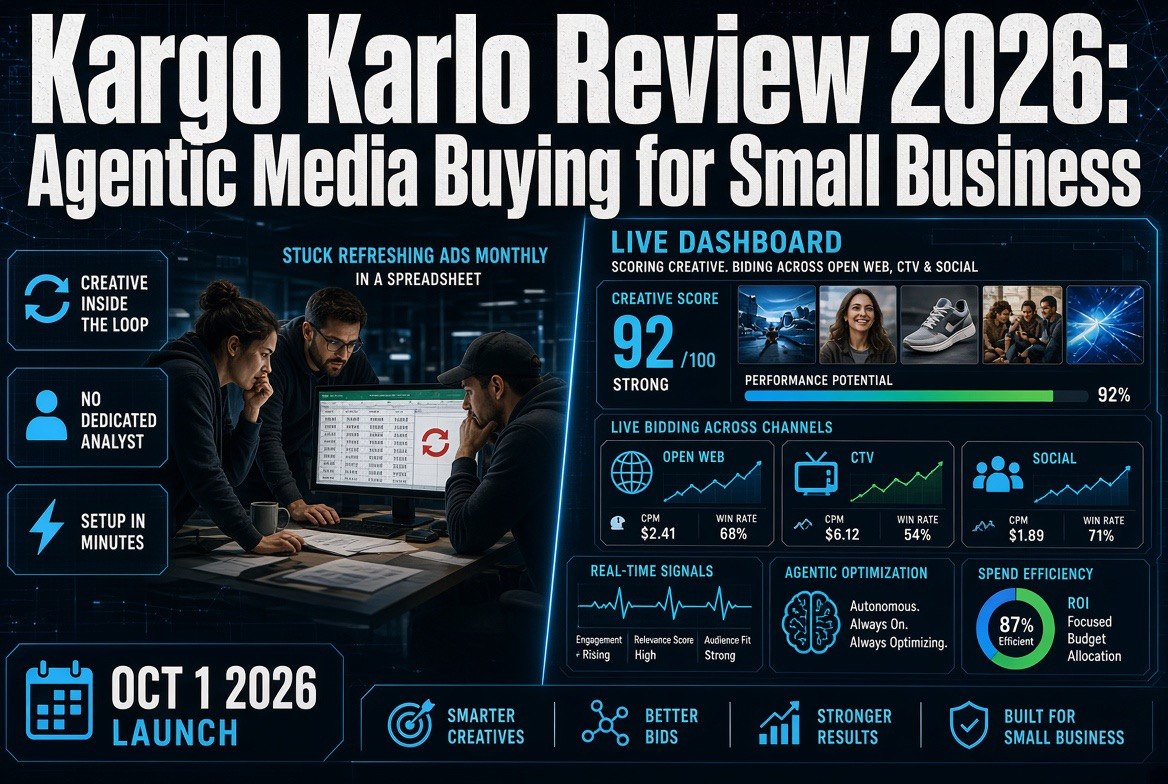
Two systems sit underneath it. Creative Science is grounded in Kargo’s proprietary cross-platform performance data, accumulated across two decades of running campaigns. Media Intelligence combines premium audience data with Kargo’s contextual signals. Together they let a smaller team plan, create, and activate campaigns across the open web, connected TV, and social from a single system.
The practical claim is that connected video campaigns, which previously required enterprise-scale budgets and staff, are now reachable for a business that has neither. Setup takes minutes. Reporting lives in one place. No dedicated analyst is required by the workflow.
The Creative-Inside-the-Loop Claim, In Kargman’s Words
Founder and CEO Harry Kargman drew the line himself at launch. His argument is that the agentic wave has been automating the parts of advertising that were already automated, while the largest performance lever sat untouched outside the loop. Creative, he says, is usually left out of decision-making even though it moves results more than anything else. Karlo’s claim is that it takes the creative a business already has and puts it into scoring and real-time adjustment alongside bidding and targeting, so a smaller team gets an advantage that used to require enterprise budget and headcount.
Strip the marketing off that and the technical claim is specific. Creative assets are scored, fed into real-time decisions, and adjusted alongside media buys, rather than approved once by a human and left to run. That is a meaningful difference from the standard workflow, where creative is refreshed on a monthly cycle and media is optimized hourly.
The One Number That Matters: The Ad Council Result
Kargo ran Karlo on a campaign with the Ad Council for its Love, Your Mind mental health initiative. The goal was reaching adults who tend to disengage from traditional mental health messaging, a hard audience with a long history of being unreachable through standard targeting.
The results reported at launch:
| Metric | Result |
|---|---|
| Lift in ad recall | +21% |
| Lift in aided awareness | +10% |
Aided awareness lifting alongside ad recall is the part worth noting. Ad recall alone can be bought with frequency. You hammer an audience until they remember seeing something. Aided awareness moving with it means the message landed well enough that people recognized it when prompted. For a mental health campaign aimed at a skeptical audience, that is the harder of the two numbers.
The Ad Council’s chief media officer, DJ Perera, described the partnership as a way to meaningfully engage an audience that can truly benefit from mental health messaging and resources, and framed it as an example of how marketing, media, and AI technology can be combined to improve outcomes for people who are struggling.
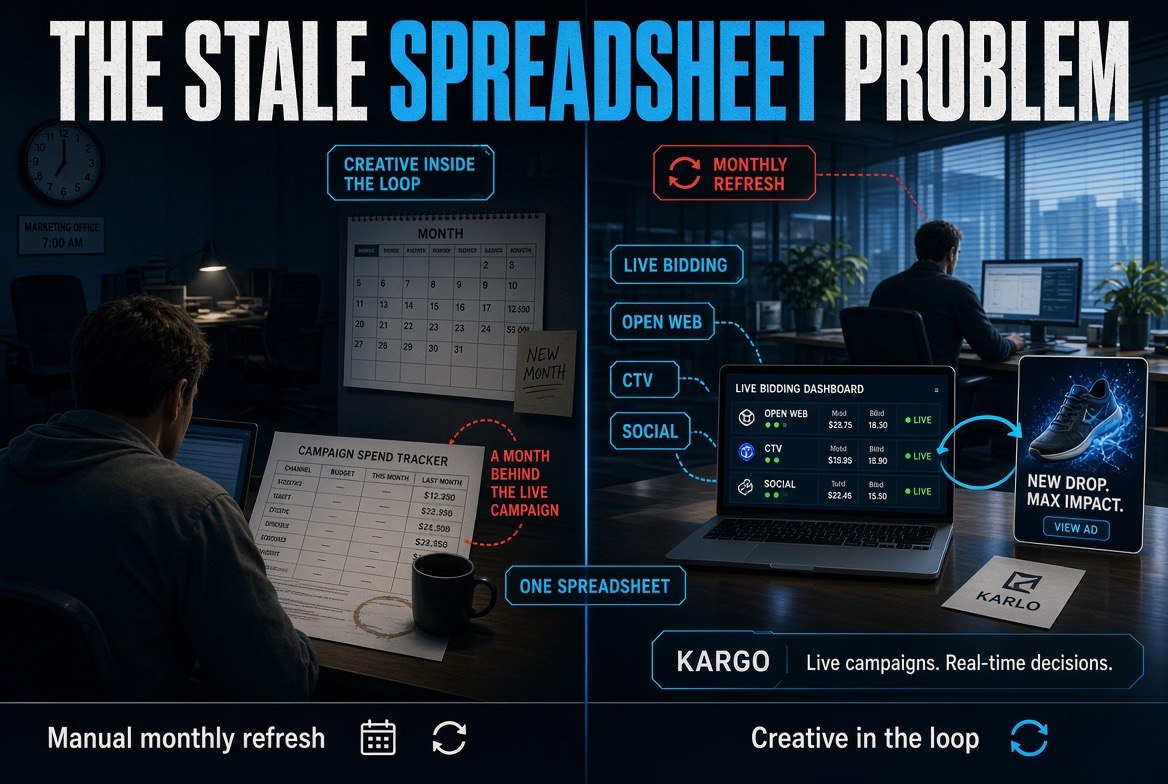
The old workflow against the new one: a hand-refreshed monthly spreadsheet on the left, a live bidding loop with the creative scored inside it on the right.
Karlo vs. a Traditional Self-Serve Ad Platform
If you have run ads through a standard self-serve platform, the comparison below is where the product either justifies itself or does not.
| Factor | Typical Self-Serve Platform | Karlo |
|---|---|---|
| What gets optimized | Bidding and targeting | Bidding, targeting, and creative performance |
| Creative refresh cycle | Manual, revised weekly or monthly | Scored and adjusted in real time alongside media |
| Channel structure | Separate buys per channel, often separate buyers | One flow across open web, CTV, and social on a single audience target |
| Who is required to run it | Usually someone dedicated to monitoring the account | Designed to run without a dedicated analyst |
| Setup input | Campaign structure built manually inside each platform | Existing marketing documents or natural-language prompts |
The row that decides it for most small teams is the fourth one. Not the AI. The analyst. If running paid media currently costs you a person’s attention for several hours a week, and Karlo genuinely removes that, the platform pays for itself before it improves a single metric.
What This Means for a Small Business Owner in the US
Here is the honest version, without the vendor framing.
If you already run paid media and it works. The creative-inside-the-loop claim is the one to test. Take a campaign that is performing adequately, upload the creative you already have, and see whether the platform’s adjustments beat your current refresh cycle. That is a measurable test you can run inside a month.
If you have never run connected TV. CTV has historically been the channel small advertisers could not touch. The minimum spends, the production requirements, and the buying complexity all pushed it out of reach. A single-flow platform that folds CTV in next to social and open web is a genuine unlock, provided the pricing is not enterprise-shaped. Verify the spend minimums before you get excited.
If you have no marketing documents to start from. The natural-language prompt path is what you would use, and it is also the path with the least public evidence behind it. The Ad Council campaign was run by professionals with a brief in hand. Treat the prompt workflow as unproven until you have tested it yourself.
If you are outside the US. Kargo is headquartered in New York with offices across the US, APAC, and Europe, and the launch is framed around US advertisers. Confirm availability in your market before planning around it.
The Limits You Should Be Honest About
Three things the launch announcement does not settle.
One campaign is not a track record. The 21% and 10% lifts come from a single partnership with the Ad Council. It is a credible client and a real result, but it is one data point from a campaign with a professional media team behind it. Ask what the numbers look like across ten advertisers running their own accounts before you treat that as a benchmark.
Pricing is not public. The announcement says Karlo is available today and points to karlo.com. It does not publish tiers, minimum spends, or what smaller teams and businesses means in dollar terms. That is the first question to ask on a demo call, and the answer determines whether this is genuinely built for a five-person company or simply marketed to one.
Creative scoring is only as good as the creative you give it. If your assets are weak, a system that optimizes harder around weak assets does not save you. It spends your budget more efficiently on advertising nobody wants. The creative-inside-the-loop advantage compounds for advertisers who already produce decent work. It does not manufacture it.
What to Do This Week
One action, sized for someone who has a business to run.
Pick your worst-performing active campaign, the one you have been meaning to fix and have not. Write down what you currently spend per month on media and roughly how many hours a week you spend managing it. Then book a demo and ask three specific questions. What is the minimum monthly spend? Is pricing flat or percentage-of-spend? Can I bring my existing creative without reformatting it?
Those three answers tell you whether Karlo is a small-business tool or an enterprise product with small-business marketing. Everything else in the announcement is secondary to that.
How to Evaluate Any Agentic Ad Platform
The same checklist applies to whatever launches next month, because the agentic advertising category is filling up fast.
Ask what is being optimized beyond bidding. If the answer is only bidding and targeting, the tool is competing on a problem that was solved years ago and the differentiation is thin.
Ask for the client list, not the case study. One flagship campaign with a recognizable name is marketing. Ten accounts across a range of budgets is evidence.
Ask who is expected to watch the account. Any platform that requires a human to babysit it has not removed the cost it claims to remove.
Get the minimum spend in writing before you commit. This is the single most common way small businesses end up inside enterprise-priced tools.

Frozen at launch versus scored on every cycle: the creative score moving back into the bid stream is the whole Kargo Karlo claim, and it is what separates it from a traditional self-serve platform.
What Kargo Is Betting On, and Why It Matters Beyond One Product
Step back from Karlo itself for a second, because the launch says something about where the agentic advertising category is heading.
For the last two years, the agentic pitch in advertising has been the same everywhere. Point an agent at your ad account, let it manage bids and audiences, and stop paying an agency to do what software does faster. That pitch worked, which is why every major platform now ships some version of it. It also produced a category where the products are hard to tell apart, because the models all optimize the same variables against the same data.
Kargo is arguing that the obvious automation targets are exhausted. Bidding and targeting were the first things anyone automated because they are numeric, well-instrumented, and easy to measure. Creative was left out not because it matters less but because it is harder. Judging whether a video ad is working requires a model that understands the content, not just the outcome. That is a materially harder problem, and it is the one Kargo claims to have solved with two decades of cross-platform performance data to train against.
If that holds up under scrutiny, the competitive implication is larger than one launch. A platform that optimizes creative and media together has a structural advantage over one that optimizes media around fixed creative, because it can change the thing the other platform has to treat as constant. For a small advertiser, that is the difference between buying better placement for a mediocre ad and finding out which of your ads deserves the budget at all.
The reverse is also true. If creative scoring turns out to be shallow, or if it works only on certain formats, then Karlo is a competent multi-channel buying tool with a marketing story attached, and it competes on convenience rather than capability. The Ad Council numbers are encouraging but they do not settle that question. Nothing published so far does.
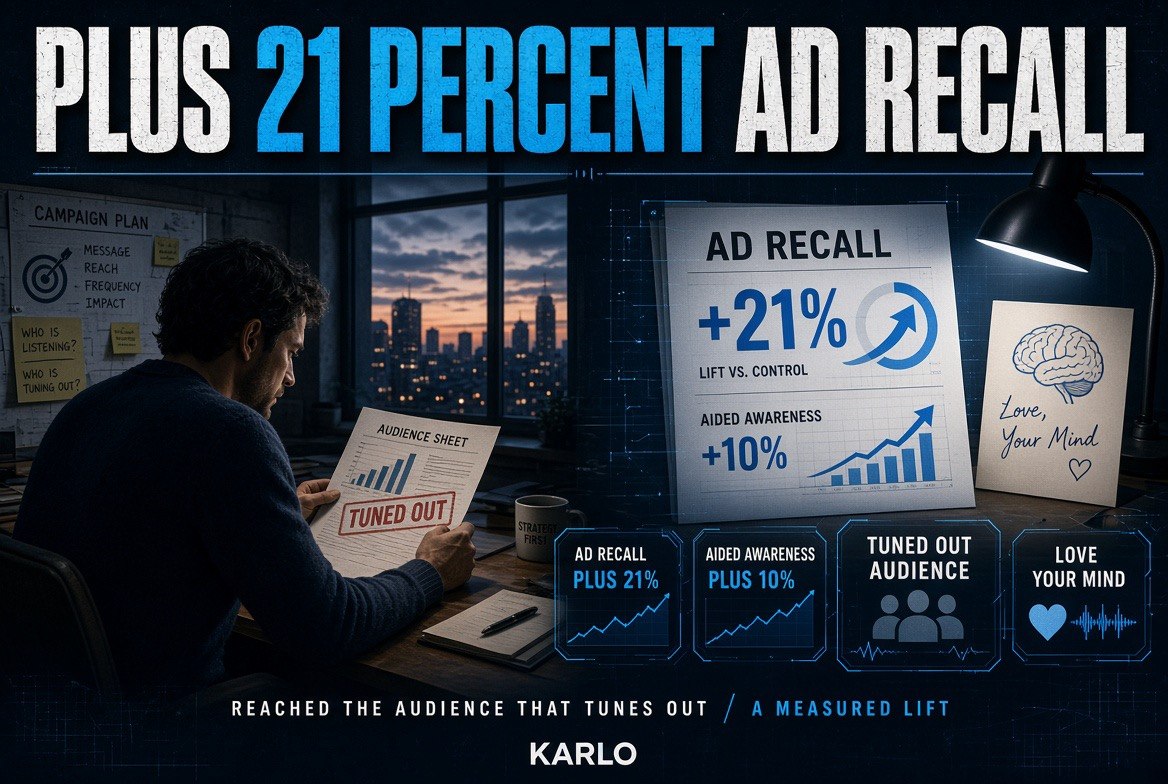
The one number that matters: an Ad Council campaign run through Karlo reported a 21% lift in ad recall and a 10% lift in aided awareness on an audience that normally tunes out mental health messaging.
Frequently Asked Questions
What is Kargo Karlo?
Karlo is a self-serve agentic media buying platform launched by Kargo on October 1, 2026. It lets smaller teams plan, create, and activate campaigns across the open web, connected TV, and social from one system, with creative performance folded into real-time optimization alongside bidding and targeting.
How much does Karlo cost?
Kargo has not published pricing, tiers, or minimum spend thresholds for Karlo. The launch announcement points advertisers to karlo.com for details. Minimum monthly spend is the first question to ask on a demo call, because it determines whether the platform is genuinely sized for small businesses.
What results has Karlo produced?
In a campaign with the Ad Council for its Love, Your Mind mental health initiative, Karlo reported a 21% lift in ad recall and a 10% lift in aided awareness, targeting adults who tend to disengage from traditional mental health messaging.
What is the difference between Karlo and a normal self-serve ad platform?
Standard self-serve platforms optimize bidding and targeting, with creative refreshed manually on a weekly or monthly cycle. Karlo scores and adjusts creative in real time alongside media decisions, and runs open web, CTV, and social in a single flow rather than separate buys.
Is Karlo available outside the United States?
Kargo is headquartered in New York with offices across the US, APAC, and Europe, but the launch is framed around US advertisers and smaller US teams. Confirm availability in your market before planning campaigns around it.

About Barak Schurr
Barak Schurr built and sold a major ticketing platform, ran global nightlife operations at Eventbrite, and now spends his time figuring out which AI tools actually move the needle for independent business owners — and which ones are just noise. No hype. No fluff. Just what works.
Email: [email protected]
More AI Resources for Your Business