Get The Solo Business OS — Free
The AI workflow that replaces a part-time employee for solo operators and small business owners.
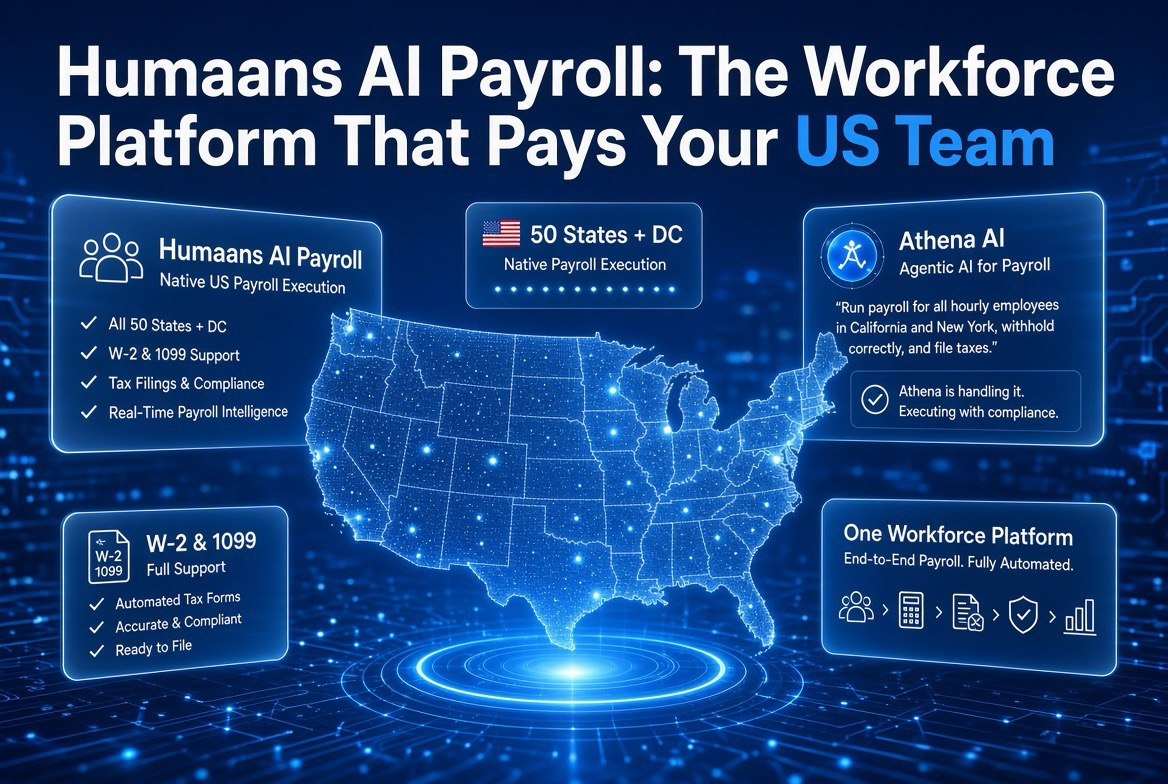
Humaans AI Payroll: The Workforce Platform That Pays Your US Team
⚡ Expert Summary: Humaans announced on August 23, 2026 that it is moving into US payroll execution, with rollout beginning fall 2026. Payroll runs natively inside its existing workforce platform — the same system of record your HR team already uses — covering all 50 states plus Washington DC, both W-2 employees and 1099 contractors, with tax calculations, payments, and filings built in. It pairs with Athena, Humaans’ agentic AI layer, so payroll tasks can be automated in plain English instead of buried in a spreadsheet.
Payroll is the most repetitive, least forgiving task a small business runs. It happens every pay cycle, it cannot be late, and a single miscalculation on taxes or a missed filing can cost an American business real money and real goodwill with its team. Most founders treat it as a necessary evil — a job to hand off to an accountant or a legacy payroll provider and never think about again.
Humaans is trying to change that assumption. On August 23, 2026, the workforce platform announced it is expanding into US payroll execution, with the rollout beginning in fall 2026. Instead of being a separate system you bolt on to your HR tools, payroll becomes a native part of the platform your people operations already run on — and, through its Athena AI layer, a process you can drive with natural language rather than paperwork.
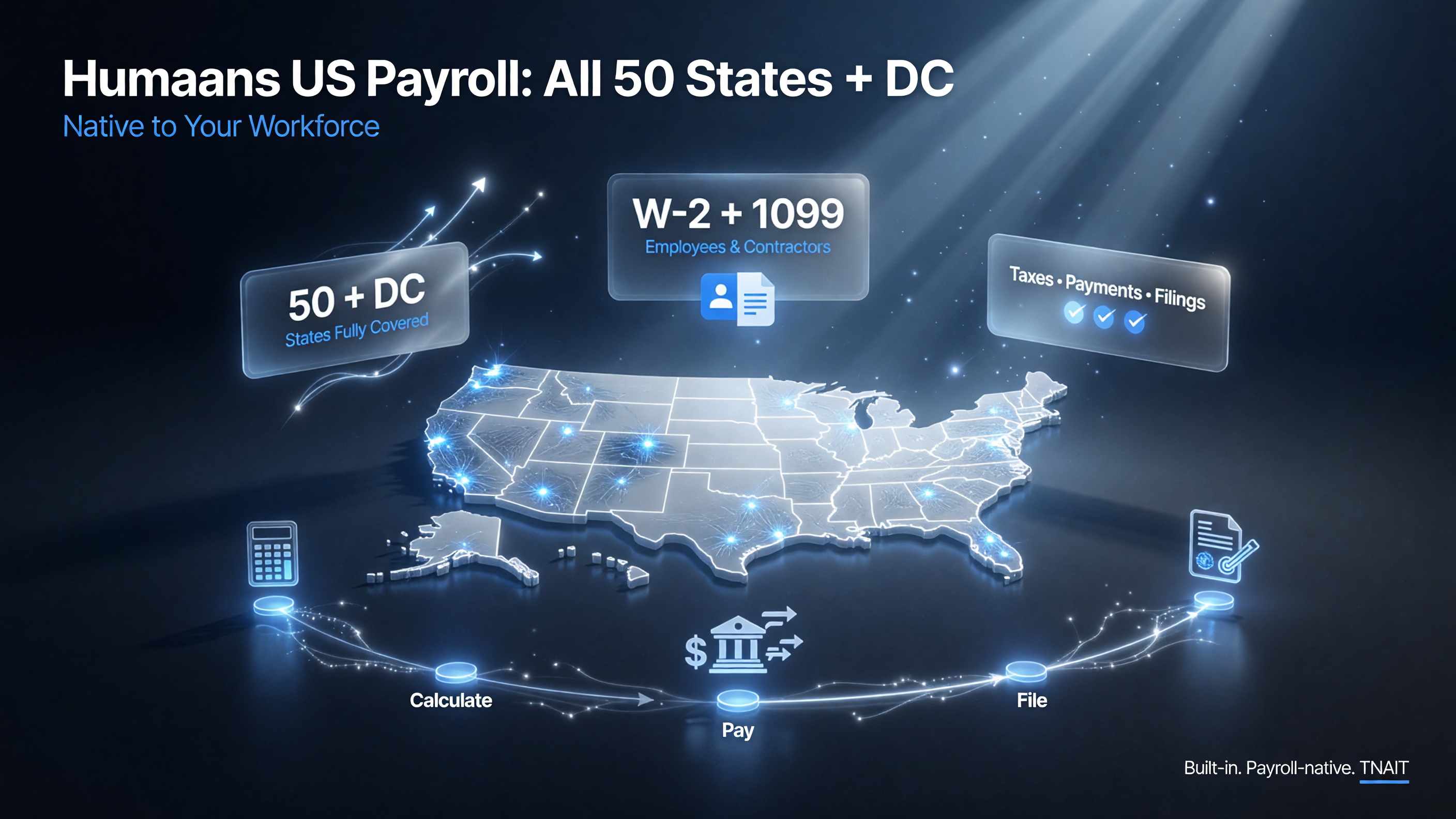
Humaans US payroll is natively built into your workforce platform — covering all 50 states plus DC, both W-2 employees and 1099 contractors, with taxes, payments, and filings handled in one place.
If you run a US small business, or you’re a founder hiring your first US-based employees or contractors, this is a meaningful shift in how payroll software is built. Let’s break down exactly what Humaans is doing, who it’s for, and where you should still be careful.
What Humaans Actually Is
Before the payroll news, Humaans was already a workforce platform — a modern HRIS and system of record used by growing companies to manage their people operations. It handles the core data layer of employment: who works where, their roles, their compensation, their leave, their onboarding. The pitch has always been that it replaces the messy, disconnected set of HR tools small teams patch together.
The new move folds payroll execution into that single system. Rather than exporting employee data to a separate payroll provider every cycle, payroll runs where the records already live. That sounds like a small detail, but it removes the most common source of payroll errors: data living in two places that slowly drift apart.
What US Payroll Brings to the Table
Based on the August 23 announcement, the US payroll execution capability is built to be genuinely comprehensive for a US payroll system:
- All 50 US states plus Washington, DC — so a multi-state team is covered from one platform.
- Both W-2 employees and 1099 contractors — the two payment types almost every small US business juggles.
- Multiple pay cycles — weekly, biweekly, semimonthly, monthly, quarterly, and annual, so you can match how you actually run payroll.
- Tax calculations, payments, and filings built in — the compliance-heavy parts handled inside the platform rather than farmed out to separate tax software.
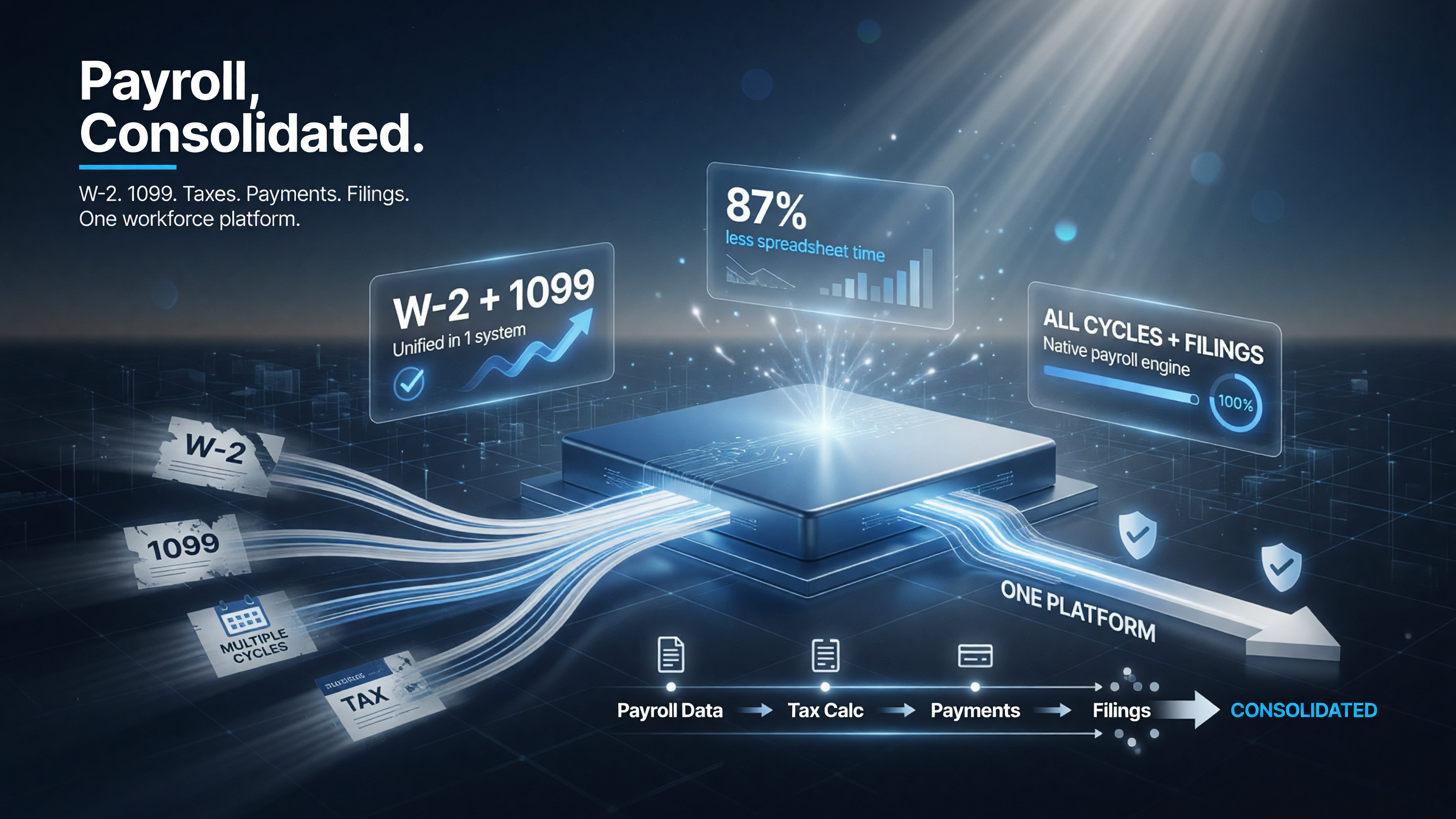
Humaans payroll consolidates what used to live in separate tools — W-2 and 1099, every pay cycle, tax calculations, payments, and filings all native to one platform.
Why Integrated Payroll Beats a Growing Tech Stack
There is a quiet war going on in small-business software, and it is about how many tools your team has to juggle. Every separate system — the HR platform, the payroll provider, the tax filing tool, the benefits system, the time-tracking app — adds a point of friction, a password, and a place where data can drift out of sync. A small team usually ends up with four or five tools doing what could be one job, and the person running them is often the founder or a single office manager who does not have time to reconcile spreadsheets.
Humaans’ bet is that payroll belongs inside the system of record, not parked in a silo next to it. When payroll runs where your people data already lives, the onboarding handoff — new hire entered once, tax election captured once, pay schedule set once — is just data that already exists, not data you re-enter into a second tool and pray matches the first.
That consolidation is genuinely valuable for an American business of 5 to 50 people. The alternative is not necessarily worse software; it is more software, and more software is more busywork. For an operator whose real job is selling and serving customers, removing even one integration from the stack is a tangible win.
The Remote-First Angle Is the Real Story
Humaans has built its reputation with modern, often distributed companies — teams that do not all sit in one city or even one country. For those companies, US payroll has historically been the awkward stepchild: the founder in London or Berlin needs to pay a US contractor or hire a US employee, and suddenly they are juggling a separate US payroll provider, state registrations, and tax rules they do not know.
Native US payroll inside Humaans directly answers that pain. All 50 states plus Washington DC, W-2 and 1099 in one place, multiple pay cycles — it turns a compliance headache into a feature of the platform you already use. If you are a founder paying remote US talent from anywhere, this is the exact scenario the rollout is designed to solve.
The strategic logic is clear: Humaans has its strongest footing with modern, often remote-first companies, and those companies very often have US-based employees or contractors, even if the company itself is headquartered elsewhere. Native US payroll turns the platform from a system that describes your people into one that actually pays them.
Athena: The AI Layer That Runs the Work
The piece that makes this more than a standard payroll add-on is Athena, Humaans’ agentic AI workforce platform. Athena was introduced around November 2025 as a way to build and deploy AI agents that answer questions, assign tasks, and execute workflows across your existing stack — HRIS, ATS, payroll, Slack, Teams, and more. It is system-agnostic, meaning it works with the tools you already use rather than forcing you onto one vendor.
In the payroll context, that means the repetitive work — “run payroll for the salaried team,” “tell me who’s due for a raise this quarter,” “flag anyone with an outstanding timesheet before payroll closes” — can be handled in natural language. The AI orchestrates the execution, pulls the data it needs, and surfaces what needs a human decision. That is a real productivity shift for a small People Ops or Finance function that is usually one person wearing many hats.
Humaans Payroll vs. Standalone Payroll Providers
To understand whether this matters for your business, it helps to see it against the incumbents. Here’s the honest side-by-side:
| Factor | Humaans Payroll | Standalone Payroll Provider |
|---|---|---|
| Runs inside your HRIS | Yes — same system of record | No — separate system to sync |
| W-2 + 1099 support | Both, natively | Varies by plan |
| State coverage | All 50 states + DC | Usually all 50, but priced per state |
| AI automation layer | Built-in (Athena, natural language) | Often limited or add-on |
| Tax calc, pay, filings | Built into platform | Core offering |
| Typical buyer | Already uses Humaans for HR | Anyone, independent of HR tool |
The real takeaway: Humaans payroll is not trying to be the cheapest or only payroll tool on the market. It is trying to be the best payroll experience for companies that already live in Humaans — and the value of one system of record, no syncing, and an AI layer on top is exactly the pitch a modern, growing US business is likely to find persuasive.
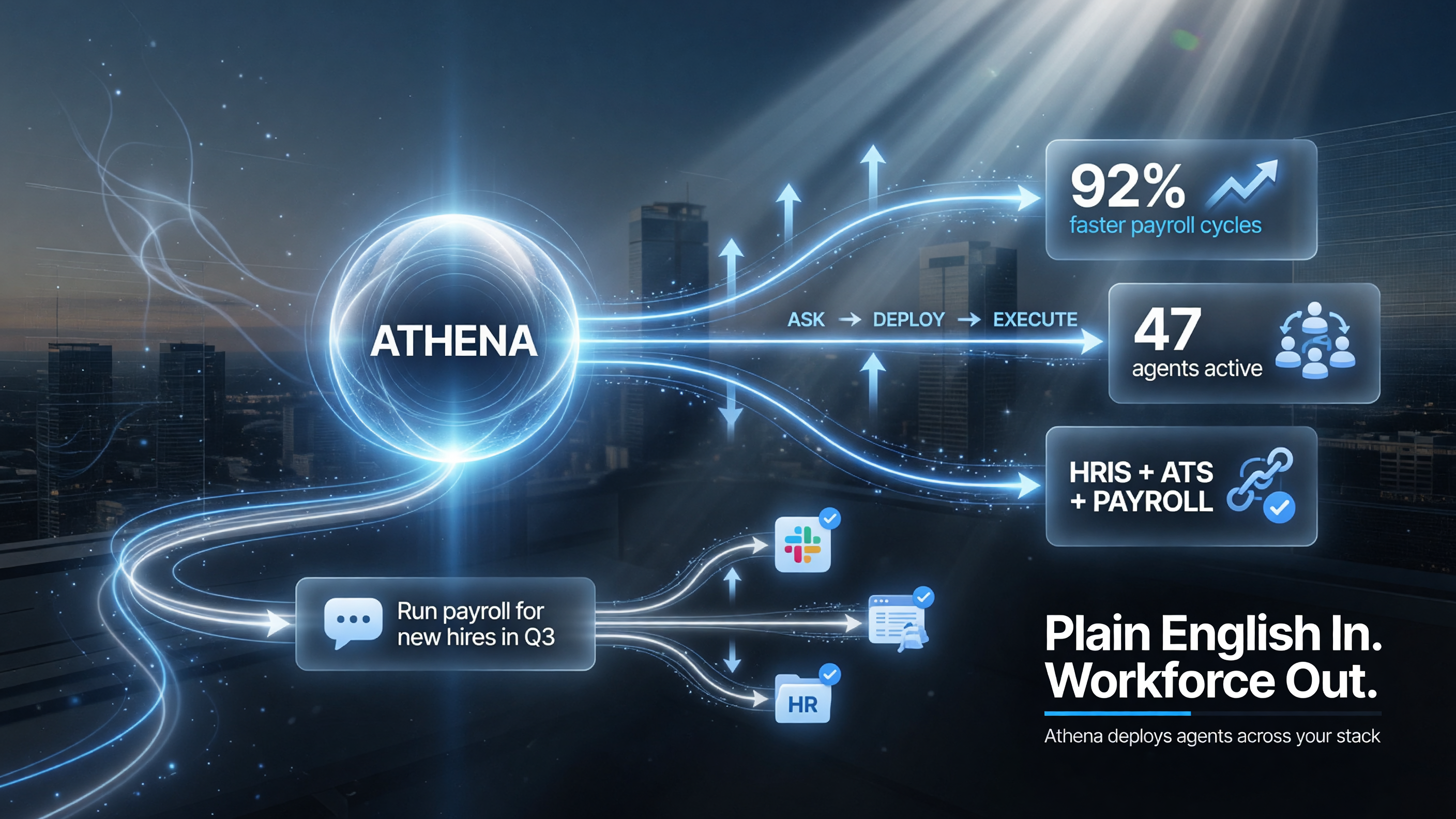
Humaans Athena is the agentic AI layer: ask in plain English and it deploys agents that answer questions, assign tasks, and execute payroll workflows across your existing HRIS, ATS, payroll, Slack, and Teams.
Who Should Care — and Who Should Wait
Let me be direct about fit, because payroll is not something you switch casually.
Good fit
- Companies already using Humaans for their workforce data and HR operations — you’re the natural audience, and consolidating payroll removes a whole sync problem.
- Remote-first US teams in multiple states, where all-50-state coverage and 1099 support save real setup pain.
- Small People Ops / Finance teams that want the Athena AI layer to absorb recurring payroll busywork.
Not a fit (yet)
- Teams not on Humaans — if you’re happy with your current HR + payroll stack, there’s no reason to switch just for this.
- Very simple, single-state payroll — if you have a handful of W-2 employees in one state, a basic provider is cheaper and simpler.
- Anyone who needs it today — rollout begins fall 2026 to selected US customers, not immediate general availability.
The Reality Check for a US Operator
Payroll is one of those places where I’d tell an American business owner to be genuinely careful, because the cost of getting it wrong is not a mild inconvenience.
If it eats your payroll data, treat that as a serious commitment. Moving payroll providers is a migration project, not a flip of a switch. Tax history, past filings, state registrations — all of that has to move correctly. Do not switch in the middle of a busy tax quarter.
The AI layer is powerful but worth auditing. Athena handling “run payroll for the salaried team” is impressive, but payroll is where an AI mistake becomes a compliance problem. Use the automation, but review the output before it goes out — especially in the first few cycles, and especially around tax filings where the consequences are largest.
Rollout is gradual, not universal. As of the announcement, it’s fall 2026 for selected US customers. If you’re interested, get on the list and plan a migration window rather than assuming you can move next pay period.
Pricing and Timeline
Humaans has not published public pricing for the US payroll execution specifically, which is the norm for a capability rolling out to select customers first. You’ll want to contact Humaans directly at humaans.io for current US payroll pricing and availability. What’s clear from the announcement is the timeline: announced August 23, 2026, with rollout beginning fall 2026.
| Milestone | Date | What Happens |
|---|---|---|
| Athena AI launch | ~Nov 2025 | Agentic AI workforce platform introduced |
| US payroll announcement | Aug 23, 2026 | Expansion into US payroll execution revealed |
| Rollout begins | Fall 2026 | Selected US customers onboard first |
The Bottom Line
Humaans moving into US payroll execution is a vote for consolidation. It bets that the future of payroll for growing, often remote-first companies is not a separate tool but a native part of the workforce platform — with an AI layer handling the recurring work. For a US business already running on Humaans, that is an attractive path to one less integration and a lot less spreadsheet wrangling. For everyone else, it’s a strong signal about where the category is going, even if it’s not a reason to switch today.
Watch the fall 2026 rollout, get your company on the list if the fit is right — and for more breakdowns of the latest business AI tools, browse the AI tools archive, and never forget: payroll is the one system where “good enough” is not good enough. Verify, review, and let the AI do the busywork — not the thinking.
Frequently Asked Questions
What is Humaans US payroll?
Humaans US payroll is payroll execution built natively into the Humaans workforce platform. Announced August 23, 2026, it covers all 50 US states plus Washington DC, supports W-2 employees and 1099 contractors, and includes tax calculations, payments, and filings, with rollout beginning fall 2026.
How is Humaans payroll different from standalone payroll providers?
Standalone payroll providers are separate systems you sync with your HR tools. Humaans payroll runs inside the same platform that already holds your workforce data, removing sync errors, and it pairs with the Athena AI layer for natural-language automation of payroll tasks.
Does Humaans payroll support contractors?
Yes. Humaans US payroll supports both W-2 employees and 1099 contractors, so teams mixing employee and contractor payments can run both from one platform.
Which US states does Humaans payroll cover?
Humaans US payroll covers all 50 US states plus Washington, DC, which makes it viable for multi-state and remote-first teams.
When is Humaans US payroll available?
Rollout begins fall 2026 to selected US customers. It was announced on August 23, 2026, and general availability is being staged, so interested companies should contact Humaans directly at humaans.io.

About Barak Schurr
Barak Schurr is the founder and former president of the nightlife ticketing platform Wantickets and former Global Director of Dance and Nightlife at Eventbrite. He currently focuses on AI research and writes about practical AI for independent business owners that actually moves the needle — no hype, no corporate fluff. More at topnotchaitools.com.
Contact him at [email protected]
More AI Resources for Your Business