OpenAI Files for $1 Trillion IPO — 3 Things Every Small Business Owner Should Know Before the September Listing
⚡ Expert Summary: Key Takeaways
- OpenAI filed a confidential IPO prospectus with Goldman Sachs and Morgan Stanley, targeting a public listing as early as September 2026 at a valuation above $1 trillion.
- The company generates $25 billion in ARR with 900 million weekly active users — but is still operating at a loss while competitor Anthropic just hit profitability.
- For small business owners, the IPO means more scrutiny on pricing, pressure to monetize, and potential ChatGPT subscription cost increases. Lock in your plans now.
Bottom line: OpenAI going public is the single biggest signal that the AI industry is moving from venture-funded experimentation to public-market accountability. Your costs may go up, but the tools will get more reliable and transparent.
On May 22, 2026, OpenAI did something no frontier AI lab has done before: it filed a confidential IPO prospectus with the SEC, setting a target valuation above $1 trillion and a timeline for public listing as early as September 2026. The Wall Street underwriters are Goldman Sachs and Morgan Stanley — the same firms that handled the Facebook and Google IPOs. That tells you the scale they’re operating at.
If you’re a small business owner who uses ChatGPT, the OpenAI API, or any AI tool built on OpenAI’s models, this is not just Wall Street news. This is a direct signal about what your AI tools will cost, how they’ll work, and who they’ll serve in the years ahead. Whether you run an e-commerce store, a consulting practice, or a local service business, the products you depend on for daily operations are about to change fundamentally.
Here are the three things you need to know — and what to do about each one.
1. Your ChatGPT Subscription Is Probably Going Up
OpenAI is filing for a $1 trillion valuation while still operating at a loss. That math doesn’t work without significant revenue growth. Let’s break that down. To justify a $1 trillion valuation at current revenue levels, the market is pricing OpenAI at roughly 40x its $25 billion ARR. For comparison, Microsoft trades at around 30x earnings. Nvidia trades at roughly 35x. OpenAI’s multiple assumes aggressive future growth, and the only way to deliver that growth is to monetize the user base more aggressively.
Here’s what we already know: the company recently launched ChatGPT Pro at $200/month and introduced an AI Ultra subscription model. They’ve also started showing ads in the free version of ChatGPT. The IPO filing confirms the direction — OpenAI needs to monetize its 900 million weekly active users more aggressively. Every one of those 900 million users represents potential revenue that isn’t being captured today.
For small business owners on the $20/month ChatGPT Plus plan: expect a price increase before or shortly after the September listing. The Plus tier has been deliberately cheap to build market share. Once the company is public, shareholders will demand margin improvement. That means the $20 tier either disappears entirely or gets restructured into a lower-capability plan with the useful features moved to higher tiers.
Look at what happened with API pricing in late 2025. OpenAI raised GPT-4o API prices by roughly 30% across the board, citing increased compute costs. The IPO accelerates this trend. Every dollar of revenue matters more when you have to report it to analysts every quarter. The pressure to show quarter-over-quarter growth in average revenue per user (ARPU) is immense for a newly public company.
The API is where OpenAI makes its real money. ChatGPT subscriptions are a rounding error compared to enterprise API revenue. If you’re building any tool or workflow on OpenAI’s API, expect tiered pricing based on usage volume, not the current flat-rate model. High-volume users consuming millions of tokens per month will get squeezed first. Small-business users who consume under 100K tokens a month might actually see stable pricing — you’re not the target of the monetization push right now.
What to do: If you’re on a monthly ChatGPT plan, consider locking in an annual subscription at current rates. Most providers grandfather pricing for annual commitments. For API users, set up budget alerts at 80% of your monthly spend and review your prompt efficiency — shorter prompts, fewer context tokens, and cached responses all reduce your bill when prices rise. Also, track your monthly token usage now so you have a baseline before any pricing changes hit.
2. The IPO Forces Transparency — That’s Good for You
One of the biggest frustrations small business owners have with AI tools is the black box. Models change overnight. Pricing shifts without notice. Features appear and disappear based on whatever the labs feel like building that week. Remember when OpenAI suddenly deprecated Codex in 2023 and developers lost months of work? That kind of thing doesn’t happen at public companies because the SEC requires disclosure of material changes that could affect customer contracts.
Public companies have to disclose material changes. They have to report earnings every quarter. They have to explain their strategy to analysts who ask hard questions about revenue concentration, customer churn, and competitive threats. OpenAI’s current “we’ll tell you what we’re building when it ships” approach won’t fly when the SEC is involved.
When OpenAI goes public, you’ll get quarterly insights into exactly how the business is performing, what’s driving growth, and where the company is investing. That transparency makes it easier to bet your business on their platform — because you’ll see the writing on the wall before a crisis, not after. You’ll know if enterprise revenue is slowing, if a competitor is eating their lunch in a specific vertical, or if their R&D pipeline has shifted away from your use case.
Think about what we’ll learn from an OpenAI 10-K filing: customer concentration risk (what percentage of revenue comes from Microsoft’s Azure deal?), geographic breakdown (which markets are growing fastest?), R&D spend as a percentage of revenue, employee retention rates, and litigation exposure. These aren’t abstract numbers. They directly tell you whether your use case is a strategic priority or an afterthought for the company.
What to do: Save the date of OpenAI’s first earnings call (expected Q4 2026). Listen to what they say about enterprise vs. consumer revenue split. That’ll tell you which segment they’re prioritizing for the next 12 months. Also set up a Google Alert for “OpenAI SEC filing” — the S-1 document itself will contain hundreds of pages of business detail that most people won’t read, including risk factors, competitive analysis, and historical financial data.
3. The Race to File First Is About Narrative Control
The timing of OpenAI’s IPO filing matters deeply. It came the same week Anthropic announced its first-ever profit of $559 million on $10.9 billion in quarterly revenue. That’s not a coincidence. OpenAI’s team knew Anthropic’s numbers were coming and chose to file first to control the story.
Think about the optics: OpenAI generates $25 billion in ARR but operates at a loss. Anthropic generates $10.9 billion in quarterly revenue and makes money. OpenAI needs to tell a growth story. Anthropic can tell a profitability story. Both can be true, but they lead to very different investor expectations.
By filing first, OpenAI gets to set the narrative. They get to frame the conversation around user growth, total addressable market, and artificial general intelligence — not around the bottom line. Their S-1 will lead with 900 million weekly active users, $25 billion ARR, and the thesis that AI is the biggest platform shift since mobile. If Anthropic files second, every analyst will compare Anthropic’s profitability to OpenAI’s losses, and the conversation shifts from potential to proof. OpenAI knows this. That’s why they filed when they did.
For your business, this rivalry is productive. Competition between the two biggest AI labs means better products, more innovation, and — for now — competitive pricing. But the window is closing. Once both companies are public, the era of subsidized AI pricing ends. The competition shifts from “who builds the best model” to “who generates the best margin.” That’s a different game with different winners.
What to do: Don’t pick sides. Build your workflows to be platform-agnostic where possible. Use APIs with standard interfaces. Keep your data portable. Export your configurations, templates, and prompt libraries monthly. The AI landscape in 2027 will look very different from 2026 — the winners haven’t been decided yet, and the losers will be the businesses that locked themselves into one ecosystem without an exit plan.
The Bottom Line for Small Business Owners
The OpenAI IPO is a milestone. It confirms that AI is now a real industry with real economics, real customers, and real public market expectations.
But milestones don’t pay your bills. What matters is what you do next:
- Lock in pricing where you can. Annual plans are your friend. Before September, review every AI subscription you have and lock in annual rates wherever possible.
- Diversify your AI stack. Don’t put all your workflows on one platform. Test Claude, Gemini, and specialist tools alongside ChatGPT. Have a migration plan for each workflow.
- Watch the earnings calls. The information advantage goes to the people who pay attention. You don’t need to be an analyst — just read the shareholder letter and note the top three risks they disclose.
- Keep your data portable. Export your history, templates, and configurations regularly. You don’t want to be locked in if your primary platform’s pricing doubles or if they deprecate a feature you rely on.
- Budget for increases. If you’re spending $100/month on AI tools today, plan for $150-$200/month by mid-2027. Price that into your service rates now, not when the increase hits your credit card.
The AI industry just grew up. The venture capital era is ending. The public markets era has begun. Make sure your business is positioned for the new reality.
FAQ
When will OpenAI actually go public?
The confidential filing targets September 2026, but the timeline could shift based on market conditions and SEC review. Most analysts expect Q3-Q4 2026. No. The IPO changes ownership structure, not product availability. However, pricing changes are likely within 12 months of listing. Not necessarily. Both companies are viable long-term. The IPO actually adds transparency and accountability to OpenAI, which is a positive for business users. Grandfathered plans are typically honored until the user voluntarily changes their plan. If you’re on an old pricing tier, don’t change anything. History suggests the opposite. Public companies often invest more aggressively in R&D during their first 1-2 years as a public company to justify their valuation. At a $1 trillion+ target valuation, OpenAI would be the largest tech IPO in history by a wide margin. Facebook was valued at $104 billion at IPO. Alibaba was $25 billion. Google was $23 billion. OpenAI is in a completely different league. Yes. A significant portion of the capital raised will go toward compute infrastructure and next-generation model training. The company has signaled it will spend heavily on data center buildout and custom AI chip development. About Barak Schurr Barak Schurr built and sold a major ticketing platform, ran global nightlife operations at Eventbrite, and now spends his time figuring out which AI tools actually move the needle for independent business owners — and which ones are just noise. No hype. No fluff. Just what works. More AI Resources for Your BusinessWill the IPO affect my ChatGPT access?
Should I switch to Claude because OpenAI is going public?
What happens if I’m on a grandfathered pricing plan?
Does the IPO mean OpenAI will stop innovating?
How does the IPO compare to other big tech IPOs?
Will IPO proceeds be used for model development?



Similar Posts
US Small Business AI Adoption: The Real Gap Is Training, Not Tech
The Next Challenge in Small Business AI Isn’t Technology — It’s Training ⚡ Expert Summary: Goldman Sachs’ March 2026 survey of 1,256 small business owners (via the 10,000 Small Businesses Voices program) found 76% are using AI and 93% of users report positive impact. But only 14% have fully embedded AI into core operations. The…
Wix Symphony: AI Agent Platform for Small Business
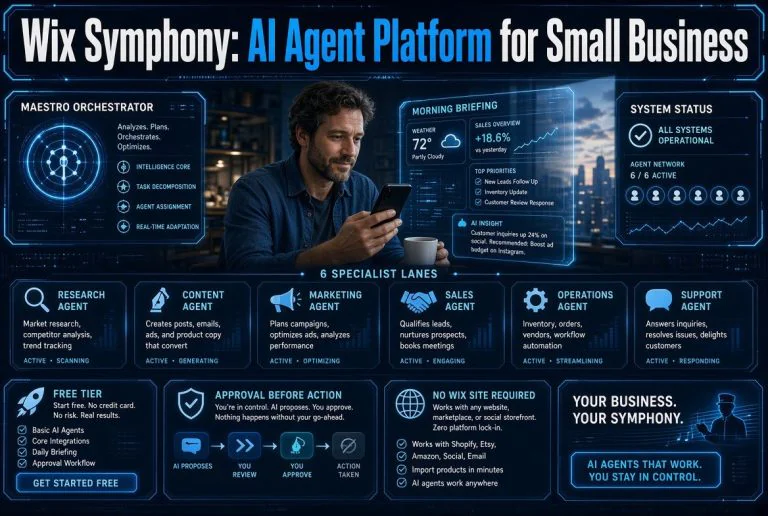
Wix Symphony is an AI agent platform for small business. What it builds, what it costs, and where it stops.
Humaans AI Payroll: The Workforce Platform That Pays Your US Team
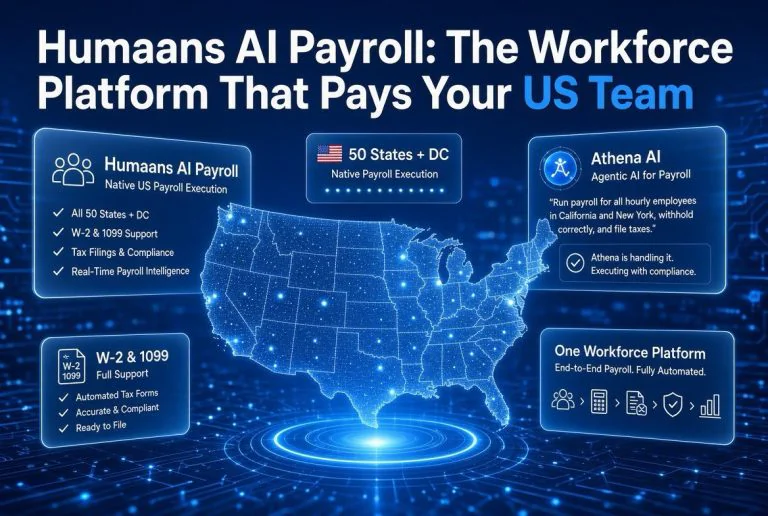
Humaans AI Payroll: The Workforce Platform That Pays Your US Team ⚡ Expert Summary: Humaans announced on August 23, 2026 that it is moving into US payroll execution, with rollout beginning fall 2026. Payroll runs natively inside its existing workforce platform — the same system of record your HR team already uses — covering all…
Emergent AI: Build Business Apps Without Code — 30M Series C
Emergent AI: Build Business Apps Without Code — $130M Series C ⚡ Expert Summary: Emergent Labs raised $130 million in Series C funding at a $1.5 billion valuation for its AI-powered platform that lets non-technical business owners build full-stack web and mobile applications using natural language. The Bengaluru-based startup, founded by twin brothers Mukund and…
66% of Small Businesses Now Use AI — Thryv 2026 Report Shows 70% Revenue Increase
66% of Small Businesses Now Use AI — Thryv 2026 Report Shows 70% Revenue Increase ⚡ Expert Summary: The Thryv 2026 Small Business AI Report, released July 9, reveals 66% of US small businesses now use AI — up from 55% the prior year. Among users, 70% report revenue increases, 83% save 11-40 hours per…
A Security Firm Hacked the Browsers Inside Five AI Coding Tools
A Security Firm Hacked the Browsers Inside Five AI Coding Tools. Two Still Aren’t Patched. ⚡ Expert Summary: On October 29, 2026, AI security startup Forever Security published research it calls Embrace — for EMbedded BRowser — documenting flaws in Cursor, GitHub Copilot, Anthropic’s Claude Desktop, OpenAI’s Codex and Microsoft’s VS Code. The embedded browsers…