Get The Solo Business OS — Free
The AI workflow that replaces a part-time employee for solo operators and small business owners.
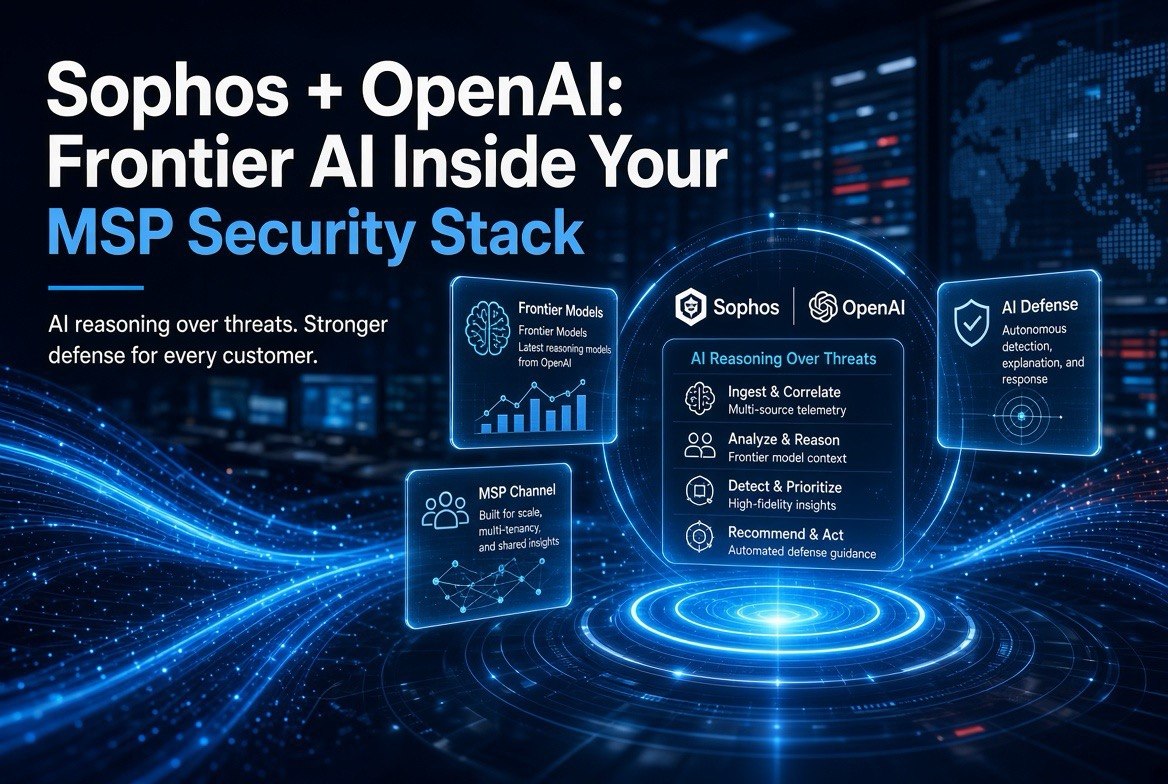
Sophos + OpenAI: Frontier AI Now Inside Your MSP Security Stack
⚡ Expert Summary: Sophos is integrating OpenAI’s frontier models into Sophos Fusion, its AI-native cybersecurity defense system, for MSPs and the channel. The deal also introduces Sophos AI Defense in early access — giving businesses visibility into shadow AI usage, policy enforcement, and data governance. This targets a managed-service ecosystem of more than 25,000 MSPs. For a typical small or mid-size business that outsources IT, the practical effect is a security stack that detects and responds faster, plus a tool to see which AI tools your own employees are actually using.
Sophos and OpenAI just announced a partnership that puts frontier AI directly inside your managed security provider’s toolkit — announced at Black Hat USA on August 6, 2026. If your business relies on a managed service provider (MSP) for IT and security, this changes what your provider can catch, automate, and defend against. Here is what the deal actually includes, what it means for a small or mid-sized business, and what you should ask your MSP about it.
Here is the backdrop most small business owners miss. Your MSP — the company that keeps your email, network, endpoints, and backups running — is only as good as the security platform it runs on. For years, that platform has been rules-based: signature updates, policy blocks, threat feeds. The Sophos + OpenAI announcement is a signal that security defense is moving from rules to reasoning. Instead of waiting for a signature to match, the platform can reason about suspicious behavior in real time, the way a very fast, very thorough security analyst would.
This matters for you because breaches are not a big-company problem anymore. Ransomware and BEC (business email compromise) target exactly the kind of company that uses an MSP — a business with real cash flow, real client lists, and operations too busy to run its own security operations center. If your defense is a category behind, the gap is where attackers get in.
What the Sophos + OpenAI Partnership Actually Includes
The announcement spans two distinct pieces, and it is worth telling them apart because they solve different problems.
1. OpenAI frontier models inside Sophos Fusion. Sophos Fusion is Sophos’s AI-native cybersecurity defense system — it is the brain that ties detection, response, and automation together across the security services your MSP delivers. Integrating OpenAI’s frontier models means the platform can do more of the heavy analytical work that used to require a human security operations analyst on the phone. Faster triage, better context on alerts, more precise response actions. For you, that translates to shorter time-to-response when something goes wrong, and fewer false alarms that burn your provider’s (and your) time.
2. Sophos AI Defense in early access. This is a separate product aimed at the messy reality of AI in the workplace. Employees use ChatGPT, Copilot, Claude, Gemini, and a dozen other tools at work — often with company data in the prompts. AI Defense gives the business (through the MSP) visibility into that shadow AI usage, with policy enforcement and data governance controls. It lets you answer the question almost no small business can answer today: what AI tools are my people using, and is any of our sensitive data going into them?
Both pieces funnel through the channel — meaning your MSP does the work, you get the outcome. That is the key structural point: this is not a product you buy and configure yourself from a console. It is a capability your managed provider enables on your behalf.
Why the MSP Channel Matters for a Small Business
Almost every US small and mid-size business runs on managed services. Security operations are expensive to build in-house — a single good security analyst costs more than many businesses’ entire IT budget. The MSP model spreads that cost across dozens or hundreds of clients, which is why it dominates the SMB market.
That scale is exactly why the Sophos + OpenAI announcement is significant beyond the two companies. Sophos serves a managed-service ecosystem of more than 25,000 MSPs. When a capability like this rolls out to that channel, it does not reach 25,000 tech specialists in a vacuum — it reaches the IT providers who support hundreds of thousands (likely millions) of small businesses across the United States and globally. Big security features that used to be enterprise-only get democratized through the channel.
For a business owner, the practical translation is competitive. Cybersecurity used to be a differentiated extra — “we pay for the good protection.” As frontier-AI defense rolls through the MSP channel, threat detection and response become table stakes. The business whose provider is on a modern platform is simply harder to breach than the one whose provider is still tuning a rule set from a console.
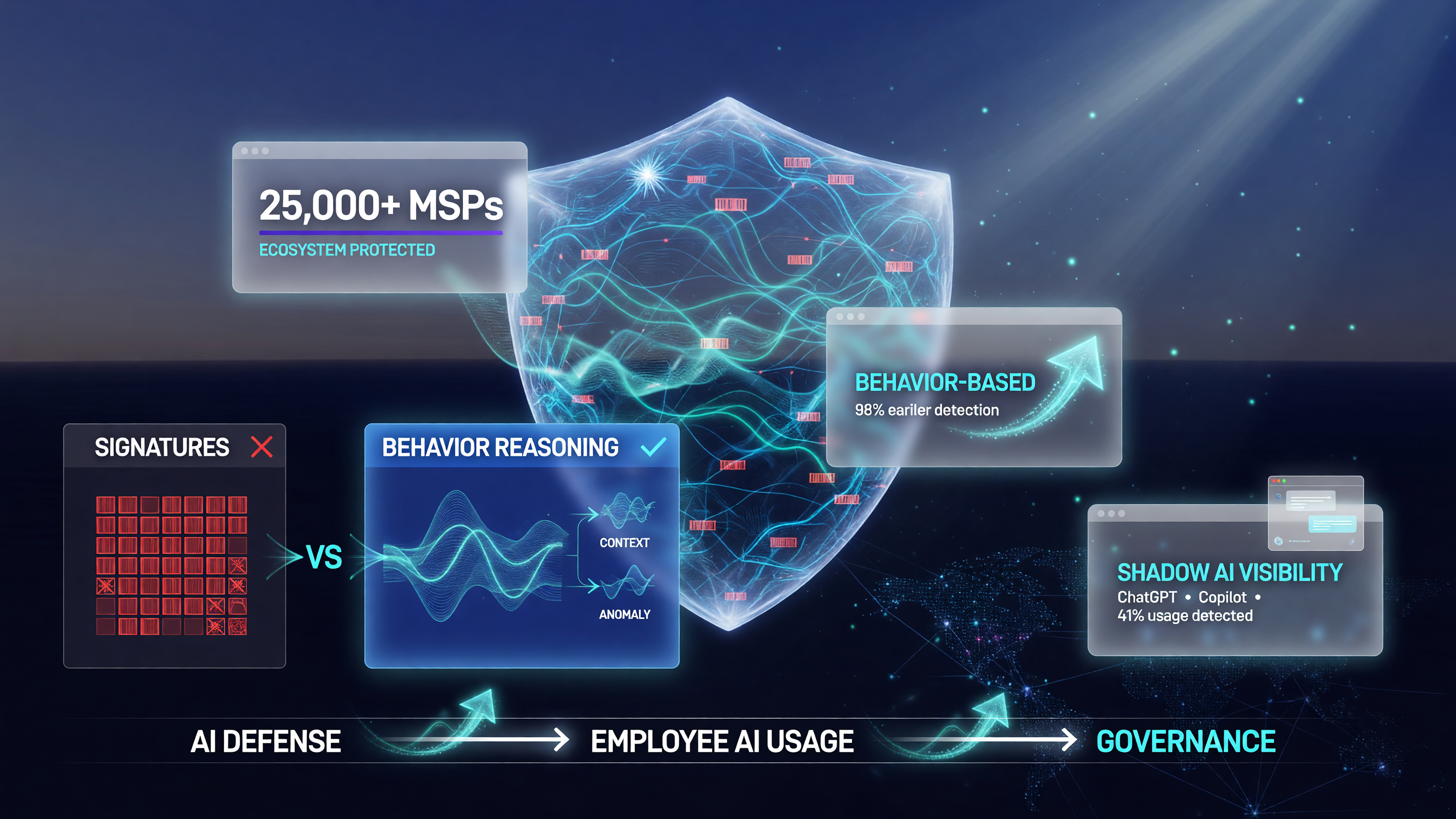
Frontier AI defense rolls through the 25,000+ MSP channel — behavior-based detection democratized for small and mid-size businesses.
Frontier AI in Security: What It Means Day to Day
Shifting from signature matching to behavior-based reasoning is not a vague upgrade — it shows up in the daily realities every business owner recognizes. Consider the phishing email that looks almost legitimate: correct branding, your real vendor’s name, a plausible invoice. A rule-based filter might let it through because the sender domain and formatting match what it has seen before. A frontier model reads the intent — it notices the urgency, the slightly wrong reply-to address, the request that does not fit the relationship — and flags it before anyone clicks.
Consider also the detection timeline. The industry measures “mean time to detect and respond,” and the gap between a rule set and an AI reasoning stack shows up there directly. A human analyst triaging a suspicious alert might take minutes to gather context; the model does the same reasoning in seconds, continuously, across every endpoint and inbox. For a business with no 24/7 security team, that speed is the difference between a contained anomaly and a full incident response. It is not hype to say that in security, the business with the better reasoning engine is simply harder to breach.
What Frontier Models Change in Detection
Traditional security catches known threats. A signature, a hash, a rule — if the attacker has seen it before, the platform has seen it before. The problem is that modern cybercriminals do not reuse attack code; they reshape it. AI-generated phishing, polymorphic malware, and automated reconnaissance mean the “known threat” playbook is increasingly ineffective.
Frontier AI models change the equation because they reason about behavior, not just matching. An AI model can ask: is this email consistent with how this person normally writes and sends? Does this network flow behave like the ones that preceded a ransomware event? Is this login pattern anomalous under the circumstances? That kind of reasoning is what a human analyst does — but the model does it at machine speed, across the entire estate, continuously.
The result for you is defense that adapts. Instead of reacting to a known attack signature, the platform spots the shape of suspicious activity and responds before the timeline reaches a ransom note. This is the single most important strategic shift in small-business security in years, and it is arriving through the exact channel most small businesses already use.
| Detection Approach | What It Catches | The Blind Spot | Response |
|---|---|---|---|
| Traditional (signature / rule) | Known malware, hashes, defined attack patterns | AI-generated and reshaped attacks it has never seen | Reactive; waits for the known signature |
| Frontier AI (behavior-based) | Anomalous logins, phishing intent, ransomware-shaped flows | Limited by what the model is trained and prompted to reason over | Proactive; flags the behavior before escalation |
Why frontier AI beats signature matching for threats that never repeat.
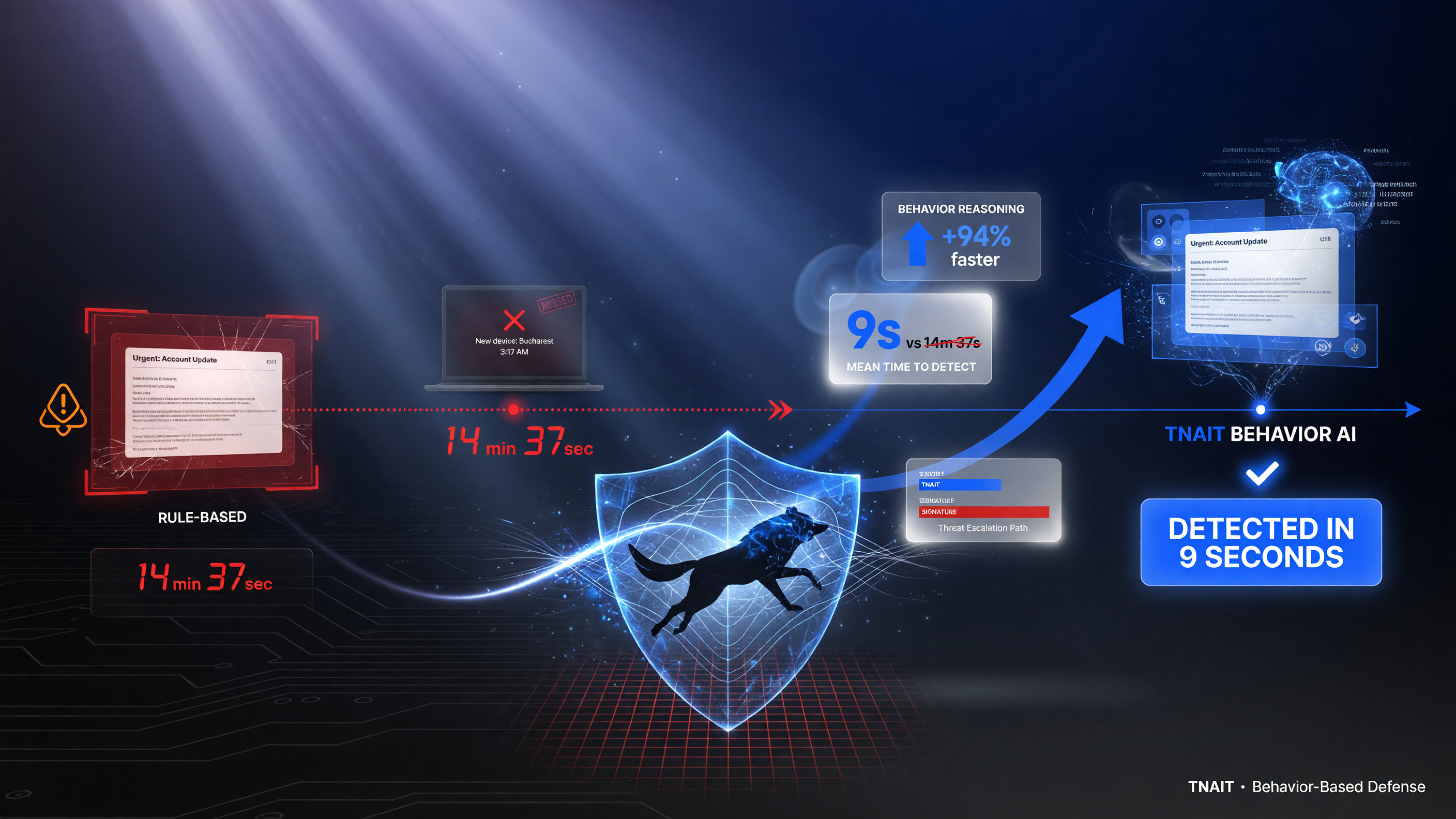
The core shift: AI reasons about behavior — so an anomalous login and a crafted phishing email get caught before they escalate, not after.
Shadow AI: The Risk You Don’t Know You Have
Here is a number every business owner should sit with: most employees use AI at work, and most of that use is invisible to the company. People paste customer lists into ChatGPT, drop draft contracts into Claude, summarize proprietary documents with Gemini — usually with no malicious intent, but with real exposure. That data has now left your control and entered a third party’s system, and you have no record of it.
Sophos AI Defense is built to close exactly this gap. Through your MSP, it gives you:
- Visibility into AI usage — which tools employees use, how often, and in what context.
- Policy enforcement — rules for what can and cannot be pasted into external AI tools, applied consistently.
- Data governance — controls to keep sensitive information from flowing into unapproved AI platforms.
For a business with client data, health information, financial records, or proprietary documents, this is not a nice-to-have. It is the difference between knowing your exposure and discovering it in an audit or a notice. Regulatory and client-contract pressure around data handling is only tightening, and the AI tools your employees reach for are a growing leak path you cannot monitor by hand.
The early-access window matters too: businesses that get in early shape the product and get ahead of the compliance conversation rather than reacting to it. Ask your MSP if they are enrolled in the Sophos AI Defense early access program.
What to Ask Your MSP
The Sophos + OpenAI announcement only helps you if your provider is actually on the platform and using the features. Many businesses never have this conversation with their MSP — they assume the provider handles security and do not ask what is under the hood. After an announcement like this, specific questions get you specific answers:
- Are you running Sophos Fusion with the OpenAI model integration, or are you on an older security platform?
- When will you roll out Sophos AI Defense to clients, and are you in the early access program?
- Can you show me a detection-and-response example where the AI reasoning caught a threat a rule set missed?
- What is my current visibility into which AI tools my employees use and what data goes into them?
- Does my current plan cover AI-governance features, or is that an upgrade?
If your provider has nothing concrete to say — no roadmap, no timeline, no early access — that itself is an answer. The MSP market is competitive, and this is precisely the moment to favor a provider that is adopting frontier-AI defense rather than one that will get around to it.
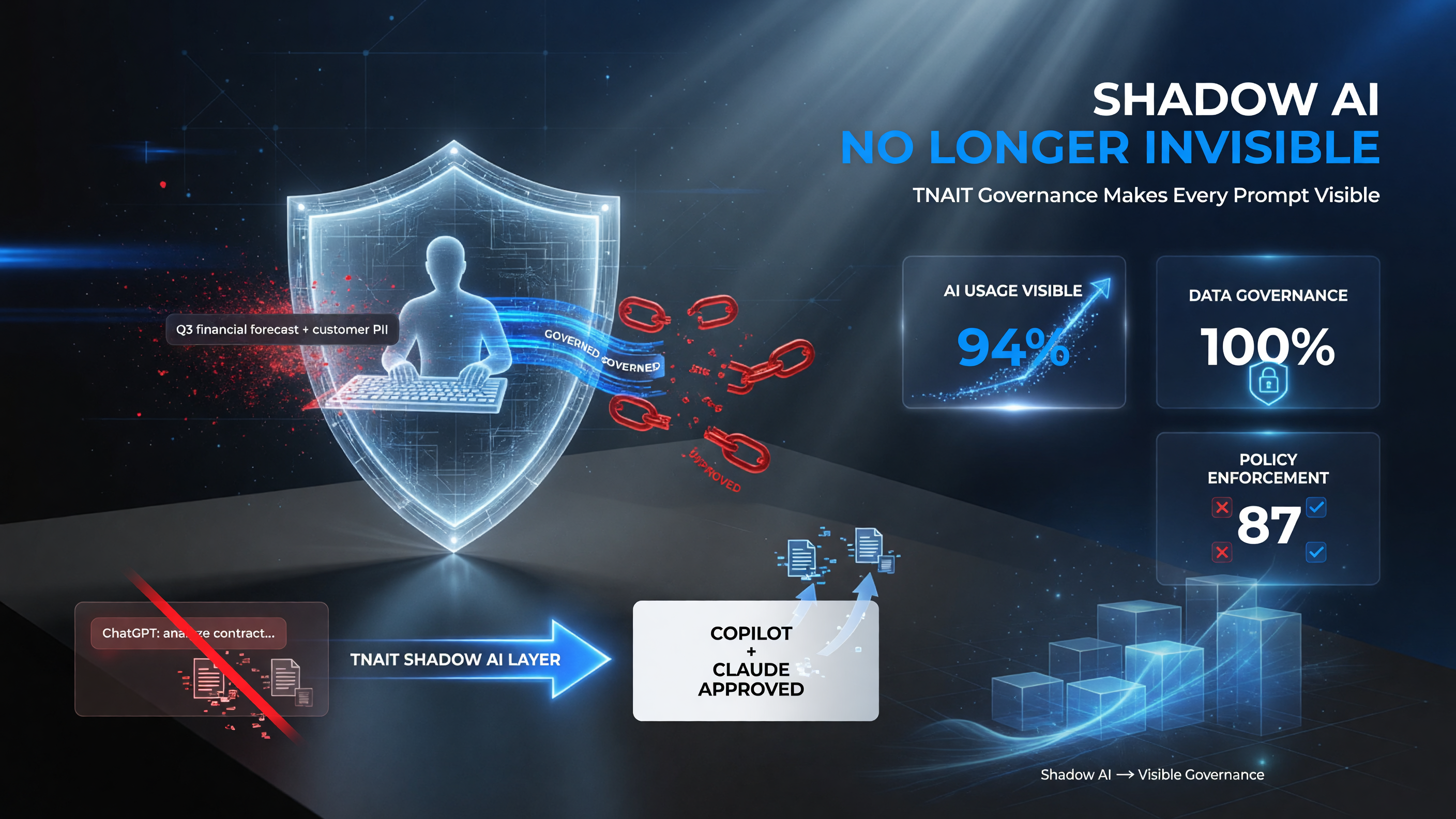
Sophos AI Defense gives you visibility into which AI tools employees use, plus policy enforcement and data governance to keep sensitive data from leaking out.
Who Should Care Most
This is broadly relevant, but a few profiles should pay closest attention:
- Businesses with client data and regulated records (health, finance, legal) — shadow AI exposure is a compliance risk you need to see and control.
- Companies that recently moved to an MSP or are shopping for one — platform choice is now a real differentiator between providers.
- Operators tired of phishing and ransomware being an annual near-miss — behavior-based detection changes how those attempts play out.
- AI-heavy teams — if your employees genuinely use ChatGPT, Copilot, and Claude daily, you need the governance layer more than most.
If none of those describe you, the cost to care is still low — a ten-minute conversation with your MSP that tells you where your security actually stands. That conversation is worth having before the next phishing wave, not during it.
Frequently Asked Questions
What is the Sophos and OpenAI partnership?
Sophos is integrating OpenAI’s frontier models into Sophos Fusion, its AI-native cybersecurity defense system, for MSPs and the channel. It also introduces Sophos AI Defense in early access, which gives businesses visibility into shadow AI usage, policy enforcement, and data governance. Announced at Black Hat USA on August 6, 2026.
How does frontier AI improve security detection?
Instead of only matching known attack signatures, frontier AI models reason about behavior — anomalous logins, suspicious network flows, atypical email patterns — and can flag threats a rule set would miss, at machine speed.
What is Sophos AI Defense?
Sophos AI Defense is a tool that gives businesses visibility into which AI tools employees use, applied policy enforcement, and data governance controls to keep sensitive information from flowing into unapproved AI platforms. It is currently in early access.
Why does the MSP channel matter for the Sophos + OpenAI deal?
Sophos serves a managed-service ecosystem of more than 25,000 MSPs. Rolling frontier-AI defense through that channel democratizes enterprise-level security for the small and mid-size businesses that rely on managed services.
Does my business need this?
If you have client data, regulated records, or employees using AI tools at work, yes — the visibility and governance features close a real exposure gap. Even if not, a conversation with your MSP about their security platform is worth having.
What should I ask my MSP about the Sophos + OpenAI deal?
Ask whether they run Sophos Fusion with the OpenAI integration, when they will roll out AI Defense, whether they are in early access, and what visibility they can give you into employee AI tool usage and data governance.

About Barak Schurr
Barak Schurr is the founder and former president of the nightlife ticketing platform Wantickets and former Global Director of Dance and Nightlife at Eventbrite. He currently focuses on AI research and writes about practical AI for independent business owners that actually moves the needle — no hype, no corporate fluff. More at topnotchaitools.com.
Contact: [email protected]
More AI Resources for Your Business